
By Tanya Kammonen
I had an interesting conversation with Anny Ortiz, PhD, the other day. Anny has recently published a paper called Fabricated ancestrality: The Sonoran Desert toad, psychedelic globalization, and the ecological politics of 5-MeO-DMT, which is an extremely comprehensive deep-dive into the background of a complex puzzle of psychedelic interest, fabricated mythologies, and legitimate ancestral practices of Sonoran desert peoples that center toads, if not in the way that the current psychedelic boom seems to want to believe.
Anny is deeply passionate about the protection of the Toad and the cultures in the region where it is naturally found. The IMC Fund has proudly supported her work with biologist Georgina Santos Barrera and a team from Mexican Universities, who recently completed a population assessment with the goal of getting the species reclassified from “not at risk” to endangered. Their presentation at MAPS PS2025 led to a NYT feature article looking at the increase in use of Toad secretions by the psychedelic movement to provide clinical treatments and other experiences to patients and seekers.
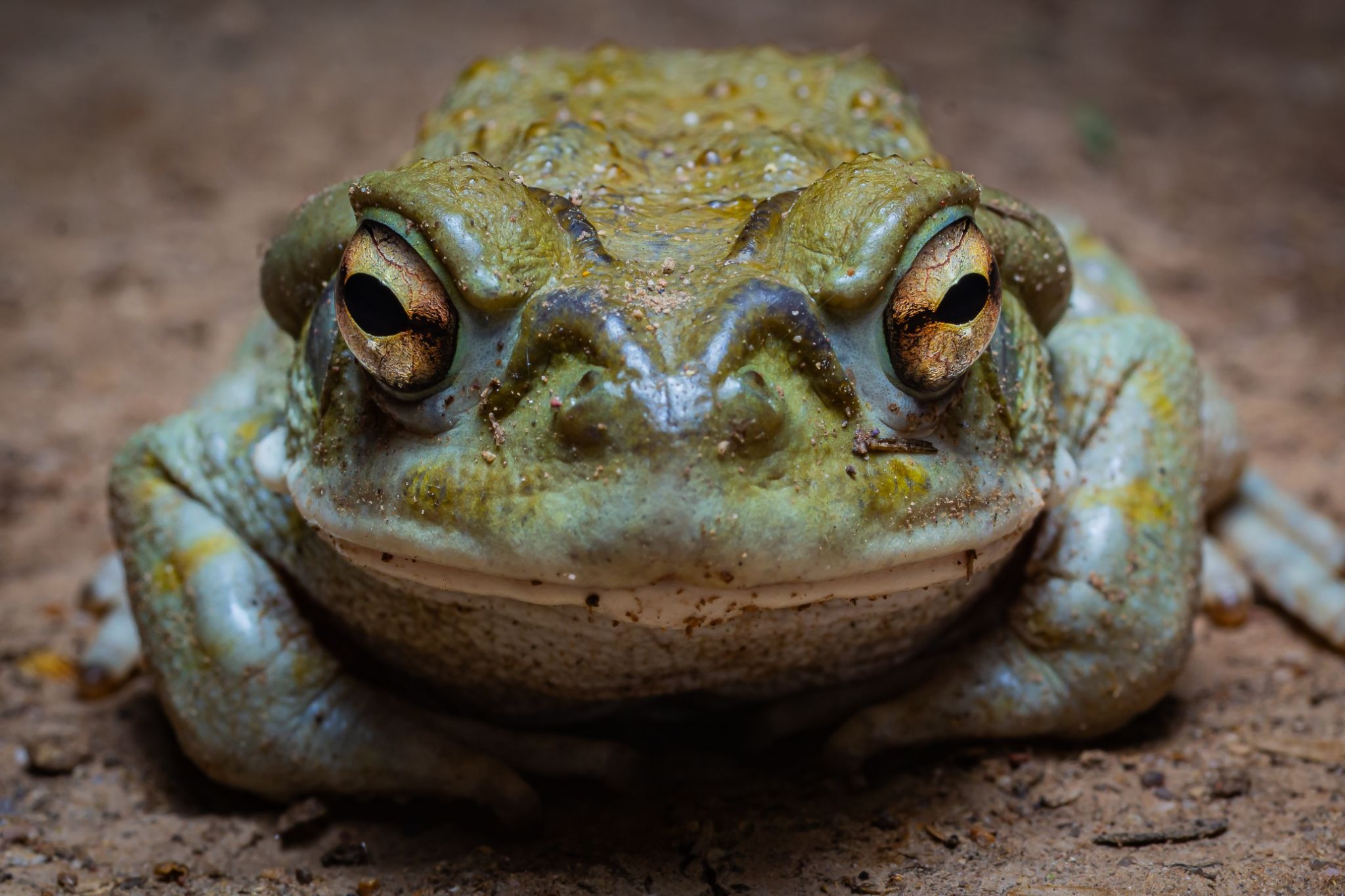
[The Incilius alvarius Toad during field assessment, photo courtesy Anny Ortiz Bernal]
The punchline of the population assessment is that, yes, the species is at risk. The formal classifications will hopefully be changed after the article is published in a journal later this year.
Fabricated Ancestrality
In the new paper, published this month in the journal Psychedelics, Anny dives into a detailed analysis of a fabricated narrative of ancestral use of Toad secretions by Sonoran Desert tribes, particularly the Seri (Comcaac), Tohono, and the Yoreme (Maya) peoples from Sinaloa. This narrative has been invented in recent years, while there is no good archaeological or anthropological evidence of ancestral use of the Toad and its secretions in the way the psychedelic movement currently uses them.
Yes, the Toad as a mythological figure is important. Yearly Bobok rituals in the Yaqui people, who notably have resisted ancestral fabrication, center Toad dances and help connect people to water and nature cycles. But there is no trustworthy evidence that people have been smoking Toad secretions for any length of time, and plenty of good evidence that this is, in fact, a recent invention, that has since been adopted by members of the Seri/Comcaac people in particular. In Fabricated Ancestrality, this chain of events is laid out, including key players and good arguments for the case.
Other examples of fabricated ancestrality exist, particularly from the Ayahuasca bioculture. There are some Amazonian peoples where Ayahuasca use seems to be a relatively recent adoption, and fabricated narratives of ancestral use can benefit commercial purposes.
Authentic Ancestrality and Antiquity Debates
Other Amazonian peoples likely have much longer use of Ayahuasca, and across biocultures, there are definitely groups who have been stewarding ancestral medicines practices through many generations.
I recently came across an article that shows evidence of positive gene selection over thousands of years in Quechua populations – possibly as a result of Huachuma use, and at the least a likely result of use of alkaloid-containing plants. This is a really incredible article that I’ll come back to below, and it led me into the world of antiquity debates: it seems there are teams of scientists who like to strongly argue for or against the antiquity of things.
My curiosity is in the risks and benefits to Indigenous communities as a result of fabricated narratives – either false narratives that a medicine practice has existed for much longer than it actually has (possibly a result of commercial interest), or on the other side, false evidence that a medicine practice has existed for less time than it actually has (often a result of lack of archaeological evidence).
Why Antiquity Debates Happen
Archaeology is a discipline built on material evidence. Claims about deep antiquity require physical proof that can be dated, replicated, and peer reviewed. When researchers find harmine in ancient hair samples from Andean mummies, some interpret that as evidence of ingestion of Banisteriopsis caapi or related alkaloid-containing plants. Others argue that harmine could derive from different sources or that contamination cannot be ruled out.
This tension is normal within science, as extraordinary claims require strong evidence. The burden of proof is high because once something enters textbooks, it shapes future interpretation.
But there is another dynamic at play.
Tropical forest environments are notoriously poor at preserving organic materials. Wood, fiber, vine, and leaf matter degrade rapidly. Ceramic technology is not required for decoction. Cooking can occur in gourds, shells, baskets lined with clay, or heated stone transfer methods. The absence of preserved brewing vessels does not demonstrate the absence of plant use. It demonstrates preservation bias.
It is important to note that this preservation bias argument applies primarily to tropical forest environments. The Sonoran Desert presents the opposite conditions: arid environments are among the best for preserving organic materials and archaeological traces. In the toad case, the issue is not an absence of evidence due to poor preservation. The ethnographic and historical record is comparatively rich, and it actively contradicts claims of ancestral use. Fabricated ancestrality, as Ortiz documents, is not a gap in the record. It is a narrative constructed against the record.
When some scholars argue that a medicine must be recent because there is no early pottery associated with it, they may be assuming that brewing requires ceramic technology. Ethnographic and archaeological evidence globally shows that cooking long predates pottery. The archaeological record is uneven, and in tropical regions it is especially incomplete.
So part of the debate is methodological caution. Part of it is preservation bias. And part of it is interpretive philosophy.
What Is at Stake in Minimizing Antiquity
Debates about whether Ayahuasca is 300 years old or 3,000 years old are not merely academic, as antiquity has political consequences.
If sacred plant practices are framed as recent innovations, then they can be portrayed as culturally fluid, interchangeable, or easily detached from specific peoples. If they are framed as deeply ancient and continuous, then they are more clearly embedded in long-standing territorial and cultural systems.
In contexts of land rights, intellectual property disputes, and bioprospecting, antiquity strengthens claims of stewardship. It supports arguments that these medicines are part of biocultural heritage rather than modern inventions.
There is also a historical pattern in anthropology of minimizing Indigenous antiquity. For much of the twentieth century, Amazonian societies were described as small-scale, recent, and environmentally limited. That narrative has been significantly revised in recent decades with evidence of large-scale earthworks, agroforestry systems, and complex trade networks.
When some researchers insist that plant medicine traditions must be recent because they cannot find early physical traces, they may be operating within older assumptions about Amazonian simplicity. That does not mean they are acting in bad faith, but it does mean that disciplinary history matters.
Trade Networks and Plausibility
There is strong archaeological evidence of pre-Incan trade between the Andes and the Amazon (by the way since I first wrote this there’s a new DNA analysis paper showing the sophisticated trade routes for Parrot feather exchange between the Andes and the Amazon). Obsidian, marine shells, feathers, and other materials moved across ecological zones. If such networks existed, it is not implausible that medicinal plants or knowledge traveled along them as well.
A medicine pouch containing multiple botanical residues suggests access to trade networks and knowledge exchange. Skeptics may argue that individual artifacts do not prove large-scale patterns. That is true. But plausibility should be evaluated in light of broader trade evidence, not in isolation.
The argument that plant medicines could not have circulated widely because the forest does not preserve evidence assumes that absence of evidence equals evidence of absence. In tropical archaeology, that assumption is particularly fragile.
What the Genetics Paper Adds
Back to the genetics paper: the 2022 genomic study does not prove that Ayahuasca or Huachuma were used 5,000 or 10,000 years ago. Genomics cannot name a specific plant preparation. It detects patterns of selection in genes related to alkaloid metabolism and neurotransmitter pathways.
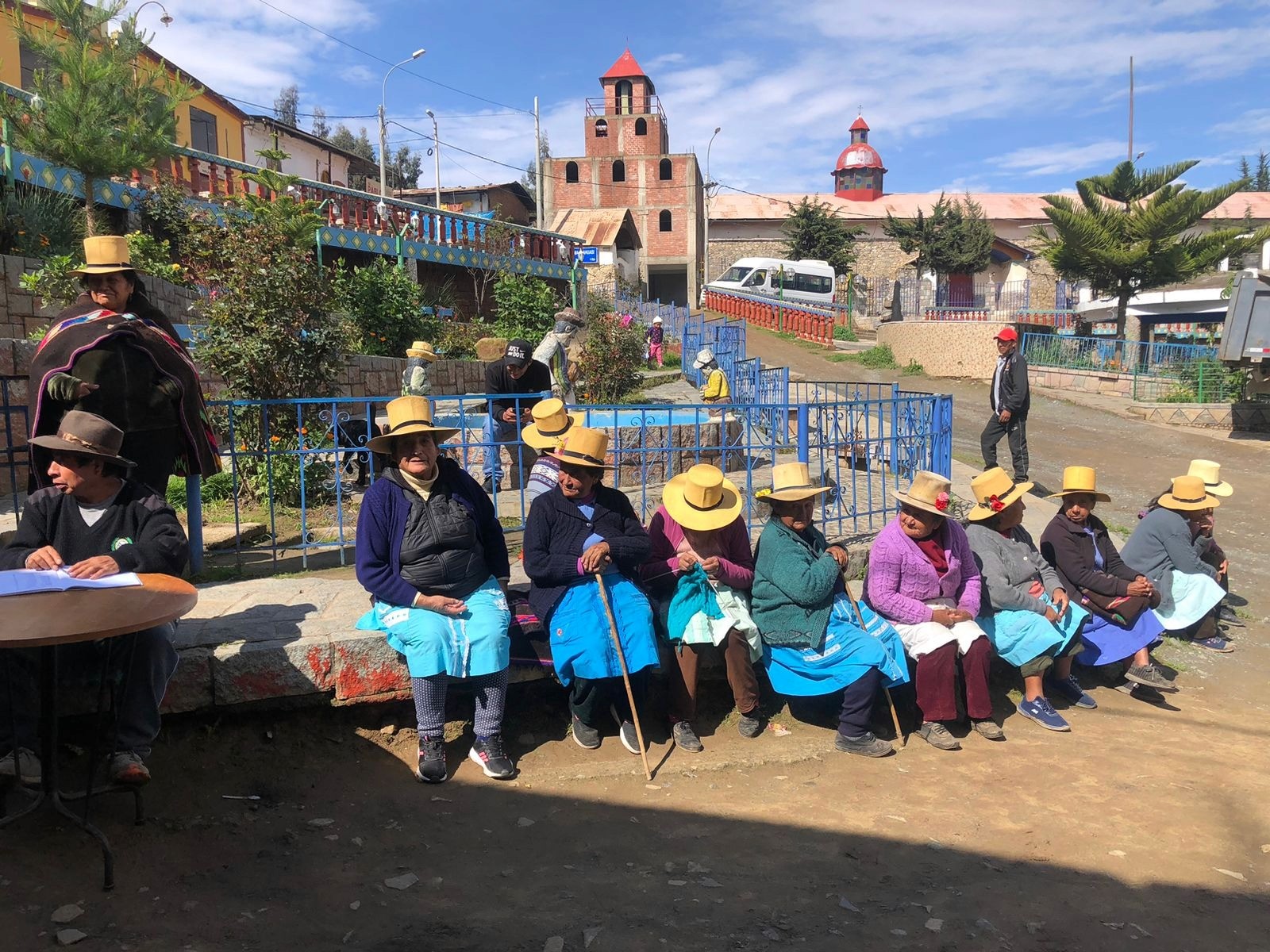
[Women in the Comunidad Campesina de San Pedro de Casta, photo courtesy of Huachuma Collective]
However, if positive selection signals are robust and replicated, they imply long-term, repeated exposure to alkaloid-containing plants at levels meaningful enough to influence reproductive fitness.
Selection strong enough to leave a genomic signature does not occur over a few centuries. It generally requires sustained exposure across many generations. That does not pinpoint a start date, but it makes extremely recent origin theories less plausible if the selective pressure is indeed tied to specific plant use.
It is also possible that selection reflects exposure to multiple alkaloid-containing plants, including tobacco and other species. The genome cannot distinguish between a single vine and a broader pharmacological environment. Still, the presence of selection suggests that plant alkaloids were culturally integrated in ways that mattered biologically.
In this sense, genomic evidence does not prove a specific antiquity claim, but it does strengthen the argument that long-term plant engagement was real and consequential.
Why Some Scholars Emphasize Recent Origins
There are several possible motivations for emphasizing recent development. Some are methodological. Scholars may be cautious about overinterpreting limited evidence. They may resist what they perceive as romanticization or projection of modern practices backward in time.
There is also a legitimate concern about circular reasoning. Oral histories and contemporary ritual forms cannot automatically be projected thousands of years into the past without corroborating evidence. Anthropologists aim to avoid assuming continuity without proof.
However, there can also be an unconscious bias toward skepticism when Indigenous claims of antiquity challenge dominant narratives. Academic culture often privileges material evidence over oral tradition. When preservation conditions are poor, this can systematically disadvantage tropical and forest-based societies.
The benefits of debunking, from a strictly academic standpoint, include methodological rigor and prevention of overreach. But the risks include reinforcing narratives that diminish Indigenous depth and continuity.
In the case of Fabricated Ancestrality, there seems to be good evidence against very ancient use of Toad secretions in the ways we see in modern times. The paper also mentions cases of Amazonian nations where there seems to be good evidence for relatively recent adoption of Ayahuasca use – but this doesn’t mean that use is relatively recent in all Amazonian nations.
A Balanced Framing
A responsible position acknowledges uncertainty while resisting premature dismissal.
It is reasonable to say that the precise antiquity of Ayahuasca as a specific preparation remains debated. It is also reasonable to say that alkaloid-containing plants were present, traded, and culturally significant in ancient South America.
Genomic evidence suggesting long-term adaptation to plant alkaloids adds weight to the idea that these interactions were not recent experiments. Archaeological evidence of trade networks makes interregional medicine exchange plausible. Preservation bias in tropical environments cautions against equating lack of artifacts with lack of practice.
Taken together, these lines of evidence support the plausibility of deep antiquity without claiming absolute proof. Readers should resist the temptation to apply the preservation bias framework to all biocultures equally. The conditions that make antiquity debates genuinely open in some Amazonian contexts do not apply to the Sonoran Desert toad case, where the evidence is not silent but speaks clearly.
What This Means for Biocultural Conversations
The broader issue is about recognizing that plant medicine traditions are embedded in long-standing ecological and cultural systems. Even if a particular preparation emerged in its present form a thousand years ago rather than three thousand, that still represents extraordinary continuity. In evolutionary terms, that is sufficient time for cultural systems to stabilize and for gene–culture dynamics to unfold.
Genomic research contributes to a growing picture of humans as participants in pharmacological landscapes. It does not replace archaeology or oral history. It adds another layer of evidence that plant–human relationships in the Americas were deep, structured, and biologically meaningful.
The most constructive path forward is not to frame the debate as believers versus debunkers. It is to integrate multiple lines of evidence, remain open to revision, and recognize the political implications of how antiquity is narrated.
Sacred medicines do not require exaggerated timelines to deserve respect. But neither should they be constrained by assumptions rooted in preservation bias or outdated models of cultural simplicity.
The emerging convergence of archaeology, genomics, and Indigenous knowledge suggests that plant medicines in the Americas are neither recent inventions nor isolated curiosities. They are part of long ecological conversations. How far back those conversations extend will continue to be studied. The evidence so far points toward depth rather than novelty for many cases, but in the case of the Sonoran Desert Toad, the evidence points strongly toward novelty and fabrication, wth resulting impacts not just on the Toad but on the peoples who cohabitate with it in its natural environment.
I encourage you to read Anny’s paper.
Our work at the Indigenous Medicine Conservation Fund is about supporting people and medicine stewards from cultures where there are active spiritual practices – which in most of the biocultures we support means ancestral use of medicines in spiritual/ceremonial forms, in their ancestral territories. In the case of the Toad, it means that the cultures have spiritual practices and significance of the species at the heart of the bioculture without necessarily having ceremonial practices that use the Toad medicine, like other cultures where Ayahuasca, Iboga, Peyote, and Mushrooms are central to the practices themselves. Our biocultures also face threats from the growing psychedelic industry, in addition to longstanding threats of climate change, cultural erosion, etc., meaning that both the cultures and the biologies need protecting.
If you liked this exploration, subscribe to our journal for more reads like this and beyond.
Inspired to support our work? Head to our donation page and make a contribution. We thank you for it.
Reference for Fabricated Ancestrality:
Ortiz Bernal, AM, et al. "Fabricated Ancestrality: The Sonoran Desert Toad, Psychedelic Globalization, and the Ecological Politics of 5-MeO-DMT." Psychedelics (2026): 100012.